
China emphasises proper handling of differences and a long-term perspective for bilateral ties ahead of President Xi Jinping's visit to India for the BRICS summit and talks with Prime Minister Narendra Modi. The visit aims to stabilise relations following the 2020 Ladakh standoff and strengthen BRICS cooperation.

'Eastern Ladakh set the relationship back by about 10 steps. So far, especially since Galwan, we may have taken just 4 steps forward.'

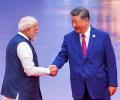
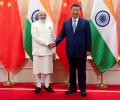
On Saturday, Prime Minister Narendra Modi and Chinese President Xi Jinping met on the sidelines of the BRICS Summit in New Delhi.
'Xi is conveying that China is a pre-eminent power, and India should modulate its actions or approaches accordingly.'

China Southern Airlines is set to resume its Guangzhou-New Delhi passenger service from September 21, ending a six-year suspension. This move is part of a broader normalisation of India-China relations, following recent high-level diplomatic meetings and previous flight resumptions by other carriers.

Chinese Foreign Minister Wang Yi stated that President Xi Jinping and Prime Minister Narendra Modi reached a crucial consensus during the BRICS summit, agreeing that China and India should be partners, not rivals. The leaders pledged to maintain peace and tranquility in border areas, deepen cooperation, and support each other in multilateral forums, aiming to strengthen the Global South and promote a multipolar world order.

Xi brought in asymmetrical power play by stating that India should have 'strategic cognition' and 'strategic judgement made on the basis of the stage of development the two countries are at'. This is a very nuanced way of asserting China's coercive diplomatic posture and reflects Beijing's penchant to unleash border instability at will, restrict rare earth metal exports, exert pressure on India at global and regional orders, asserts China expert Srikanth Kondapalli.
Ahead of Xi Jinping's visit, National Security Advisor Ajit Doval and Chinese Foreign Minister Wang Yi held extensive talks in Beijing on August 25 on the boundary issue and reached an eight-point consensus.
Prime Minister Narendra Modi, in bilateral talks with Chinese President Xi Jinping, emphasized that both nations must show sensitivity to each other's core issues and be guided by mutual respect, sensitivity, and interest. Modi highlighted the critical importance of peace and tranquillity along the Line of Actual Control for the development of India-China relations, while also addressing concerns regarding Taiwan and Tibet.
Senior officials from India and China's foreign ministries met in Beijing to discuss bilateral ties following a meeting between Prime Minister Modi and President Xi.

Chinese President Xi Jinping is in New Delhi for the 18th BRICS Summit, where he is scheduled to hold bilateral talks with Prime Minister Narendra Modi. This visit, his first to India in nearly seven years, comes amidst efforts to normalise India-China relations following the 2020 Eastern Ladakh standoff and is expected to have significant implications for bilateral ties and BRICS cooperation.

'Therefore, Beijing comes to wrong conclusions.'

Chinese President Xi Jinping's upcoming visit to India for the BRICS summit is a pivotal diplomatic event poised to significantly impact bilateral ties and global cooperation amidst ongoing international instability.

National Security Advisor Ajit Doval is in Beijing for the 25th round of Special Representatives talks on the India-China boundary issue with his Chinese counterpart Wang Yi. These crucial discussions precede Chinese President Xi Jinping's anticipated visit to India for the BRICS summit, offering a potential opportunity for a meeting with Prime Minister Narendra Modi. The talks aim to address the long-standing border dispute and recurring tensions, with both sides emphasising the importance of peace and tranquillity for bilateral relations amidst recent reports of aggressive Chinese posturing in Arunachal Pradesh.

'The impasse on the India-China border in the Sikkim sector persists, but the Hamburg meeting between the two leaders will certainly have its salutary effects on the relationship between the two countries,' says China scholar Rup Narayan Das.

Prime Minister Narendra Modi and Chinese President Xi Jinping are expected to hold bilateral meetings on the sidelines of the SCO summit in Tianjin, as both nations look to strengthen ties amid global trade tensions.

Setting up Chinese Industrial Parks in India, increased access to Indian products to bridge the ballooning trade deficit besides border issues was expected to figure in Prime Minister Narendra Modi's first meeting with Chinese President Xi Jinping on the sidelines of the BRICS summit.
A senior Chinese Communist Party official stated that the meeting between Prime Minister Narendra Modi and President Xi Jinping was fruitful, leading to a new consensus on developing bilateral relations. Both countries aim to enhance cooperation and manage differences.

The 18th BRICS Summit got underway in New Delhi with leaders of partner countries gathering in the capital to discuss the changing global economic and geopolitical landscape.
The Shanghai Cooperation Organisation (SCO) will hold its first in-person summit in Samarkand in Uzbekistan on Thursday after two years, shaking off Covid fears and providing a rare opportunity for all its eight heads of state to meet on the sidelines of the event to have face-to-face talks on pressing global and regional issues of common concern.

A Kishore Kumar song, a birthday cake, a prince's break from protocol to thank his driver, a Persian painting on the ceiling of the presidential residence -- the BRICS Summit had many memorable moments.

India is hosting the 18th BRICS Summit in New Delhi, bringing together numerous world leaders including presidents from China, Russia, South Africa, Iran, and Egypt, along with prime ministers and foreign ministers from other nations. The summit will feature bilateral talks and highlights the expanded BRICS grouping's growing global influence and India's significant role as a founding member and current chair.
China on Thursday said the meeting between Prime Minister Narendra Modi and Chinese President Xi Jinping in Russia's Kazan on Wednesday carries a "great significance" as they reached an "important common understandings" to improve the bilateral ties.

All the three issues raised by China at the Modi-Xi meeting are either intractable or peripheral to the bilateral relations and suggest conventional methods to placate the other side without yielding much, says Srikanth Kondapalli.

Prime Minister Narendra Modi and Chinese President Xi Jinping are set to meet in Tianjin on Sunday, their first in about 10 months, for wide-ranging talks aimed at improving relations.
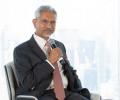
External Affairs Minister S Jaishankar is scheduled to visit China for an SCO conclave, marking a significant step in easing tensions after the 2020 border standoff. Discussions on the boundary dispute are also anticipated.

The talks are following up the outcome of the 19th round of Corps Commander-level talks held between the two sides on August 13-14 at the Chushul Moldo border meeting point.
Modi is also expected to hold bilateral meetings on the sidelines of the summit, including with Putin, and Uzbek President Shavkat Mirziyoyev among other leaders.

The Chinese delegation took stock of various aspects, including security and amenities and looked into the line-up of proposed events during the second edition of the informal summit between the Prime Minister Modi and the Chinese President, to be held from October 11 to 13.

National Security Advisor Ajit Doval stated that India-China relations have shown an "upward trend" in the past nine months, with peace prevailing along the Line of Actual Control (LAC). This statement was made during talks with Chinese Foreign Minister Wang Yi on the boundary issue, ahead of Prime Minister Modi's visit to China for the SCO summit.

The state government had on Tuesday sought the court's permission to erect banners welcoming Modi and Xi Jinping, who are slated to meet at Mahabalipuram, for their second informal meet from October 11-13.
China welcomes Prime Minister Narendra Modi's planned visit to the Tianjin Summit of the Shanghai Cooperation Organisation (SCO), expressing hope that the event will be a 'gathering of solidarity, friendship and fruitful results'.

'For this kind of informal summit, I think it is better to leave the leaders much time to discuss whatever they would like to discuss'

President Xi said that the Chinese side is ready to work with the Indian side to carry forward the fresh impetus of bilateral relations.

Nevertheless, border dispute will feature prominently on Modi's agenda but the matter won't be discussed at length. Nayanima Basu reports

Ahead of the India-China summit, Mahabalipuram, the ancient coastal town near Chennai, has been virtually turned into a fortress with unprecedented security arrangements while the beautification and other preparations touched a feverish pitch on Wednesday.
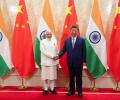
Prime Minister Narendra Modi and Chinese President Xi Jinping held bilateral talks focusing on economic ties and global stability amid trade tensions and the aftermath of the Ladakh border row.

China does not have to give up what it took in 2020, it will never give up its claim to Arunachal Pradesh, Ladakh and other areas, and it has all the time now to plan its next surprise, points out Lieutenant General Prakash Katoch (retd).
"We have tweeted that the two leaders discussed a range of issues. A range of issues means a range of issues. I don't want to add anything further... I leave it to you to draw your conclusion," external affairs ministry spokesperson Gopal Baglay said.

'Leaders of the two nations have reportedly agreed to set up a hotline between their respective military headquarters,' state-run Global Times daily reported on Wednesday.
